Invisible by Design: Why Your Brand Fails to Register — and How to Reclaim Your Place in the Customer's Mind
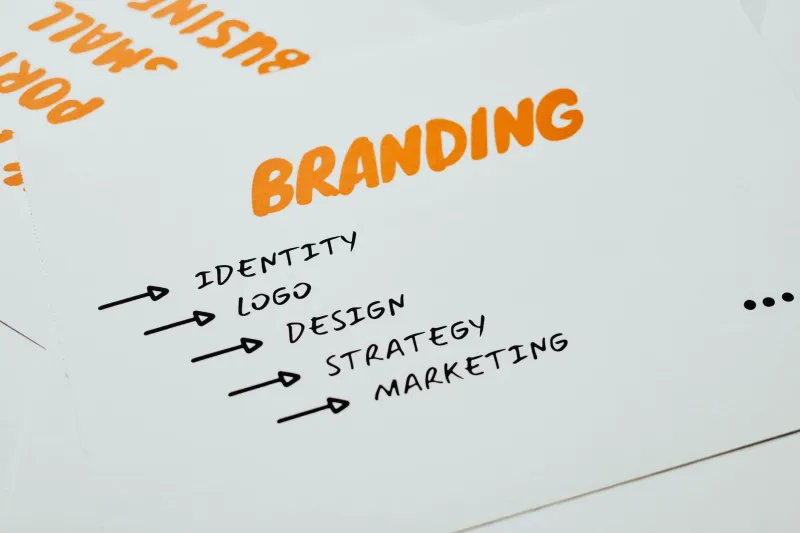
There is a particular kind of frustration reserved for marketing and brand leaders who have done everything by the book — commissioned the research, approved the visual system, launched the campaign — only to discover that their target audience cannot articulate what the company actually stands for. The budget was real. The effort was genuine. And yet, when a prospective client is asked to name the category leader, your brand does not surface.
This is not an obscure problem. It is, in fact, one of the most prevalent and least diagnosed challenges in corporate branding today. Call it brand amnesia: the condition in which a company occupies the market but fails to occupy the mind.
Understanding why this happens requires stepping away from the creative brief and into the cognitive science that governs how human beings encode, store, and retrieve brand information.
How Memory Actually Works Against Generic Branding
The brain is not a passive recorder. It is an active filter, ruthlessly prioritizing what deserves retention and discarding the rest. For a brand to achieve what researchers call "mental availability" — the likelihood of being recalled at the moment a purchasing decision is forming — it must do more than appear consistently. It must appear distinctively.
Distinctiveness is not a synonym for loudness or visual complexity. It refers to the presence of specific, ownable sensory and conceptual cues that the brain can reliably associate with a single source. When those cues are absent or interchangeable with competitors, the memory trace is shallow. Exposure accumulates, but recognition does not.
This is precisely where many corporate branding initiatives fail. The emphasis falls on polish and consistency — both legitimate goals — while distinctiveness is treated as secondary. The result is a brand that looks professional but registers as generic. Customers have seen it. They simply cannot recall it on demand.
The Four Mistakes That Dilute Memorability
Across the branding work we observe and engage with at Innopp Designs, four patterns appear with remarkable regularity among companies struggling with recall.
Positioning by category convention. When every competitor in a space uses the same vocabulary — words like "innovative," "trusted," or "solutions-driven" — and adopts the same visual register of clean sans-serif typography over neutral palettes, there is no cognitive hook to separate one brand from another. The category becomes a blur, and individual brands within it become interchangeable.
Overloading the message architecture. A brand that attempts to communicate five strategic pillars simultaneously communicates none of them effectively. Memory consolidates around singular, emotionally resonant ideas. Complexity is the enemy of retention. Companies that spread their positioning across too many claims leave audiences with no clear anchor point.
Inconsistent expression across touchpoints. Memorability is built through repeated exposure to the same distinctive assets — the same color, the same tone, the same structural logic. When a brand's expression shifts meaningfully between a trade show booth, a LinkedIn presence, and a sales proposal, the brain cannot form a stable association. Each encounter feels like a first meeting.
Confusing aspiration with identity. Many brands position around what they want to become rather than what they demonstrably are. Aspirational language is not inherently problematic, but when it is disconnected from the actual customer experience, it creates cognitive dissonance. Customers sense the gap, and trust — the prerequisite for memory — erodes.
A Diagnostic Framework for Assessing Cognitive Real Estate
Before a company can address brand amnesia, it must first confirm that the condition exists and understand its severity. The following diagnostic approach is designed to generate honest, actionable intelligence rather than the reassuring data that internal surveys often produce.
Unaided recall testing. Ask a representative sample of your target audience — without any prompting or brand cues — to name the companies they associate with your category. Track where your brand appears, how frequently, and in what context. If you are not surfacing in the first two or three names mentioned, you have a recall problem regardless of your aided recognition scores.
Positioning articulation interviews. Engage current clients in brief, open-ended conversations about what your company stands for. Do not prompt them with your messaging. Listen for whether their language mirrors your positioning or diverges from it entirely. Significant divergence signals that your intended positioning has not transferred.
Distinctive asset inventory. Audit every brand touchpoint and identify which visual and verbal elements are genuinely ownable — meaning they could not plausibly belong to a competitor. If your honest assessment yields fewer than three consistently deployed distinctive assets, your brand lacks the sensory scaffolding that memory requires.
Competitor substitution test. Take your most prominent marketing materials and replace your brand name and logo with a competitor's. If the piece reads as plausibly theirs, your positioning is insufficiently differentiated. The test is blunt, but its results are clarifying.
Building Brands That Stick
The path out of brand amnesia is not a rebrand for its own sake. It is a deliberate reassessment of what makes your organization genuinely distinct, followed by the disciplined expression of that distinctiveness through every channel and interaction.
Start with reduction. Identify the single most important idea your brand needs to own in the minds of your audience. Everything else is supporting context, not core positioning. The brands that achieve lasting recall are almost always those that resist the temptation to say everything and instead commit to saying one thing with precision and conviction.
Next, invest in developing true distinctive assets — visual, verbal, and experiential — that are unique to your brand and applied with unwavering consistency. This is not a creative indulgence. It is a memory-engineering exercise with direct implications for sales pipeline and market share.
Finally, measure recall rather than awareness. Awareness metrics tell you whether people have encountered your brand. Recall metrics tell you whether the encounter left any meaningful impression. The gap between those two numbers is where brand amnesia lives — and where the most significant competitive opportunity resides for companies willing to address it directly.
The Strategic Cost of Being Forgettable
In a market where purchasing decisions are increasingly compressed and buyers conduct substantial research before engaging a vendor, the brands that occupy mental real estate enjoy a structural advantage that no single campaign can overcome. They are considered first, trusted faster, and retained longer.
The companies that remain invisible — despite genuine investment in branding — pay a compounding price. They compete harder for attention, discount more frequently to compensate for lower perceived value, and lose clients to competitors whose positioning, however imperfect, is at least memorable.
Brand amnesia is not a creative failure. It is a strategic one. And like most strategic failures, it is entirely correctable once it has been accurately diagnosed.
At Innopp Designs, we work with corporate clients across the United States who have reached precisely this inflection point — brands with real capability and genuine market presence that have simply failed to register in the way their positioning deserves. The work of correction is methodical, evidence-based, and commercially grounded. It begins, as most meaningful things do, with an honest assessment of where you actually stand.