Seven Places Your Brand Goes to Die While Marketing Isn't Looking
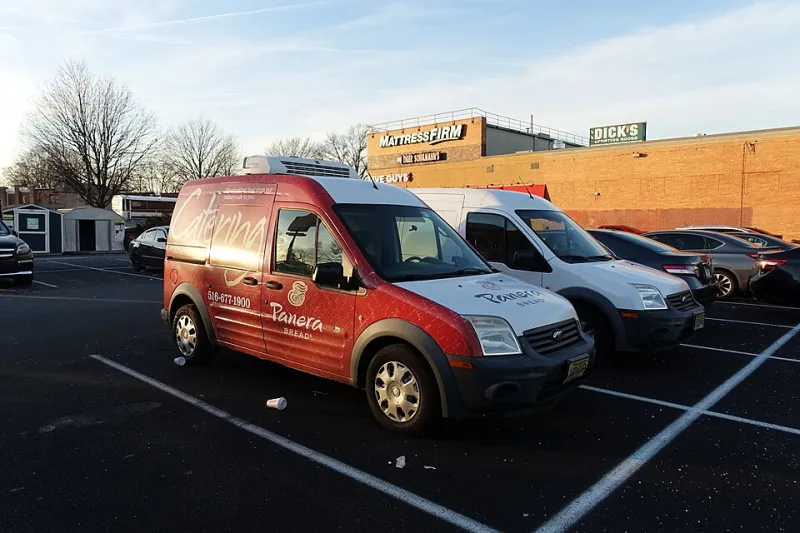
Photo: Tdorante10, CC BY-SA 4.0, via Wikimedia Commons
Every corporate brand has a headquarters and a frontier. The headquarters is the marketing department, where guidelines are written and approved. The frontier is everywhere else — the places where the brand actually meets people, usually without anyone from marketing in the room.
The frontier is where brands go to die. Not dramatically, not all at once, but touchpoint by touchpoint, in places no one audits. Here are seven of them, in roughly the order most US companies discover them (too late).
1. The Fleet
Your delivery trucks and service vehicles are rolling billboards — often the highest-frequency brand exposure a regional customer gets. A dented van with a sun-faded logo from a 2016 identity refresh tells a story, and it isn't the one in your guidelines.
Ask your team: When was the last time anyone physically inspected our vehicle fleet against current brand standards?
2. The Careers Page
Prospective employees judge your brand with more skepticism than your customers do. A hiring page with stock photography, inconsistent typography, and a tone that shifts between departments signals a company that doesn't know what it is internally.
Ask your team: If I stripped our logo off our careers page, could a candidate tell it was us — or any of our competitors?
3. The Sales Deck
Nothing mutates faster than a sales presentation. Every rep customizes, every region adds slides, and within a quarter you have forty versions of your brand story, half of them contradicted by the other half.
Ask your team: How many versions of the master sales deck exist right now, and who is responsible for retiring the dead ones?
4. Product Packaging
For product companies, packaging is the brand's most expensive real estate — and often the last to be updated after a rebrand, because tooling and print costs create real friction. The result: new brand, old shelf.
Ask your team: What is our published timeline for migrating packaging, and does it have a budget line attached or just good intentions?
5. The Trade Show Booth
Trade shows concentrate your competitors, your prospects, and your brand's weakest execution into a single convention hall. Booth graphics from three identity generations ago sit next to banners ordered by a regional manager last month.
Ask your team: Who owns booth brand compliance — and did they attend the last event, or just approve the purchase order?
6. Email Signatures
The humblest touchpoint and one of the most frequent. Thousands of emails a week, each one a tiny brand impression — many of them carrying outdated logos, rainbow-font disclaimers, and formatting that varies by employee.
Ask your team: Is our email signature centrally managed, or is it every employee for themselves?
7. Internal Communications
The most overlooked stop of all. Employees experience the brand through town halls, intranet posts, and Slack announcements long before customers do. When internal comms ignore brand standards, employees learn — accurately — that the brand is optional.
Ask your team: Does our internal communications team have access to the brand guidelines, or does the brand stop at the marketing floor?
The Pattern Behind the List
Notice what these seven places have in common: none of them are owned by a single accountable executive. Fleet management reports to operations. Recruiting reports to HR. Sales decks belong to sales. The brand fails at the seams of the org chart, precisely because no one is standing there.
Fixing this doesn't require another brand refresh. It requires an owner — someone whose job is to walk the frontier, ask these seven questions quarterly, and treat every inconsistent touchpoint as the small, compounding leak it is. Brands rarely die of a single wound. They die of a thousand unattended ones.